
Empty Spaces
What I Saw Inside Microsoft—and What It Means for the Future of Schools

I walked into the Microsoft space in Midtown Atlanta expecting energy, and in some ways, I found it immediately. The building is stunning in a way that feels intentional rather than flashy—glass walls catching the light, open staircases that invite movement, and carefully designed collaboration spaces that seem to say, “this is where ideas come to life.” It’s the kind of place that makes you believe innovation is not only possible, but inevitable. There was great food laid out, conversations already underway, and a room full of educators, technologists, and leaders who had gathered because they knew something big was happening. You could feel it before the first session even began.
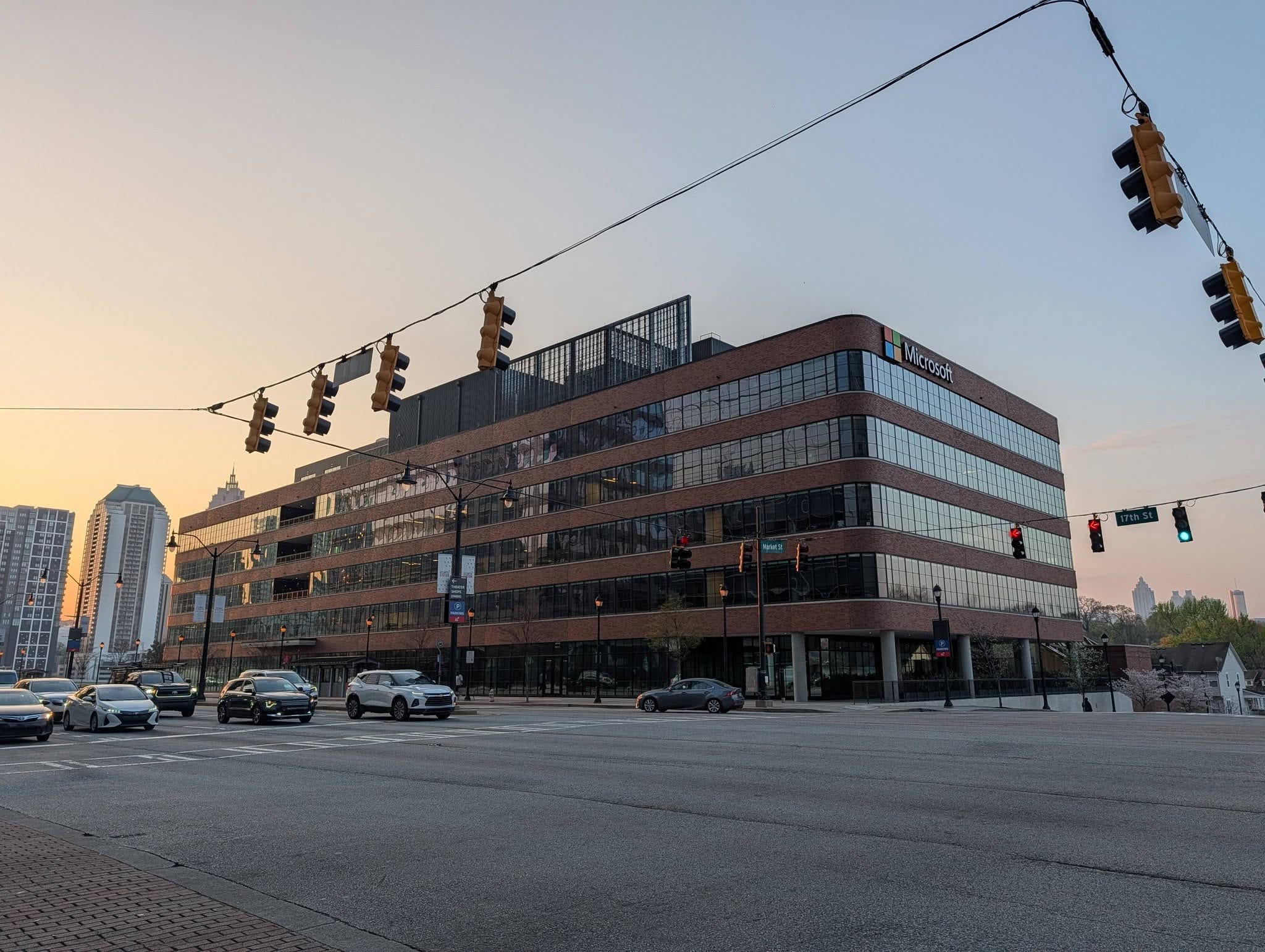
But as I started to walk the building, something unexpected settled in. Entire floors stretched out in front of us—beautiful seating areas, long tables for teams, quiet corners for focused work—and they were empty. Not partially filled. Not quiet because people were working behind screens. Empty in a way that felt almost surreal. We walked through space after space designed for collaboration, and there was no one there. It struck me that we were gathered to talk about the future of artificial intelligence inside a building built for a workforce that no longer needs to be physically present in it.


One speaker said early in the day, “AI is not enabling us to react… we’re having to deal with it,” and that statement lingered as I thought about those empty floors. Microsoft did not slowly transition into this new reality. The world shifted, and the building is still catching up. The infrastructure remains, but the behavior has changed. As I sat down for the first panel, I couldn’t help but connect that quiet, physical reality to the conversations we were about to have about schools.
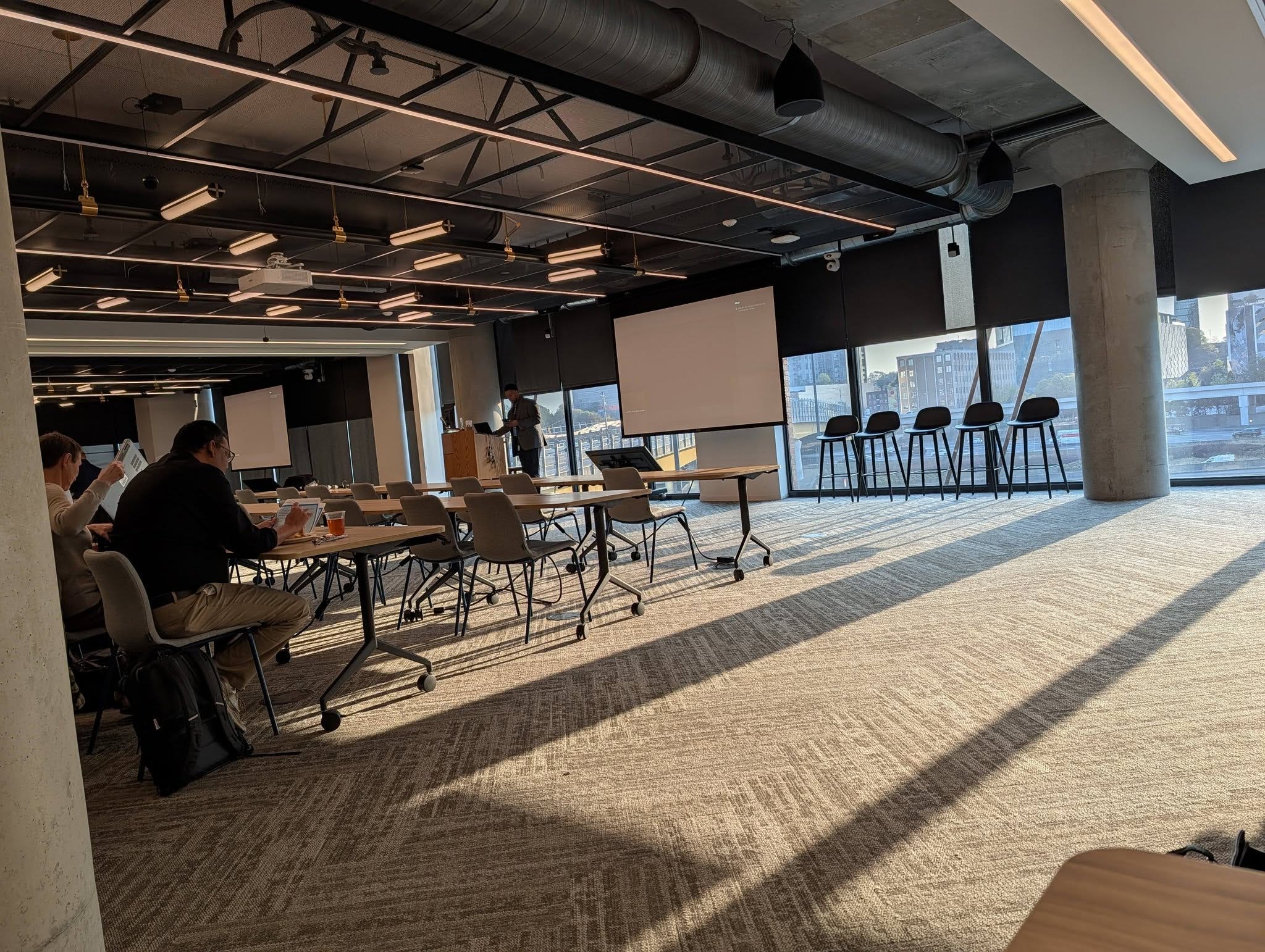
Another speaker framed the conversation in a way that grounded everything that followed when they said, “We don’t call ourselves technologists… we call ourselves educators with a technology skillset.” That distinction matters more than it seems. Because this isn’t really about tools. It’s about people, responsibility, and the systems we’ve built to support them. And those systems are now being challenged in ways we didn’t fully anticipate.
As the panel discussions unfolded, a pattern began to emerge. Public school systems, especially large districts like Fulton County, are built on scale. They are designed to serve thousands of students, supported by layers of infrastructure—IT departments, procurement processes, legal teams, data governance frameworks, and funding mechanisms that allow them to operate at a level most smaller environments simply cannot. That scale comes with power, but it also comes with weight. Decisions take time. Tools must be vetted. Data must be protected. There is no room for reckless experimentation when you are responsible for an entire community.
One of the most memorable lines of the day came when a leader said, “If it’s free, you’re the product,” and you could feel the room collectively nod in recognition. Public systems cannot afford to take risks lightly, especially in an AI landscape where data is currency. Governance, in this context, is not a barrier—it is a necessity. Another speaker reinforced this by emphasizing that procurement must happen before innovation, not after, explaining that too often people “buy stuff and then call us later,” expecting IT to make it work. In these environments, safety, compliance, and accountability are not optional—they are foundational.
At the same time, sitting in that room, I couldn’t ignore the contrast with smaller, more agile educational models. Microschools, hybrid programs, and homeschooling environments operate with a completely different rhythm. They are not bound by the same layers of approval or constrained by the same systems. They can move quickly, test ideas in real time, and adapt based on immediate feedback. Where large systems are asking, “How do we do this safely?” smaller environments are often already asking, “Is this working?” That difference is not just operational—it’s philosophical.

One speaker captured part of this tension when they said, “We’re not going to say no to your problem… we’re going to say no to your solution.” It’s a powerful mindset, one that protects systems from unintended consequences, but it also reveals the friction inherent in large-scale operations. Innovation, in these environments, must be carefully filtered, shaped, and approved before it can take root. That process ensures safety, but it slows movement. And in an AI-driven world, speed is not just an advantage—it may be a requirement.
Another moment that stayed with me came when a panelist said, “This is not a tech conversation… this impacts teachers more than us.” That statement felt true, but incomplete. Because as I sat there thinking about the empty Microsoft building, I began to wonder if this shift goes even deeper. What if AI is not just changing how teachers teach, but where learning happens altogether? What if this is not just a classroom transformation, but a structural one?
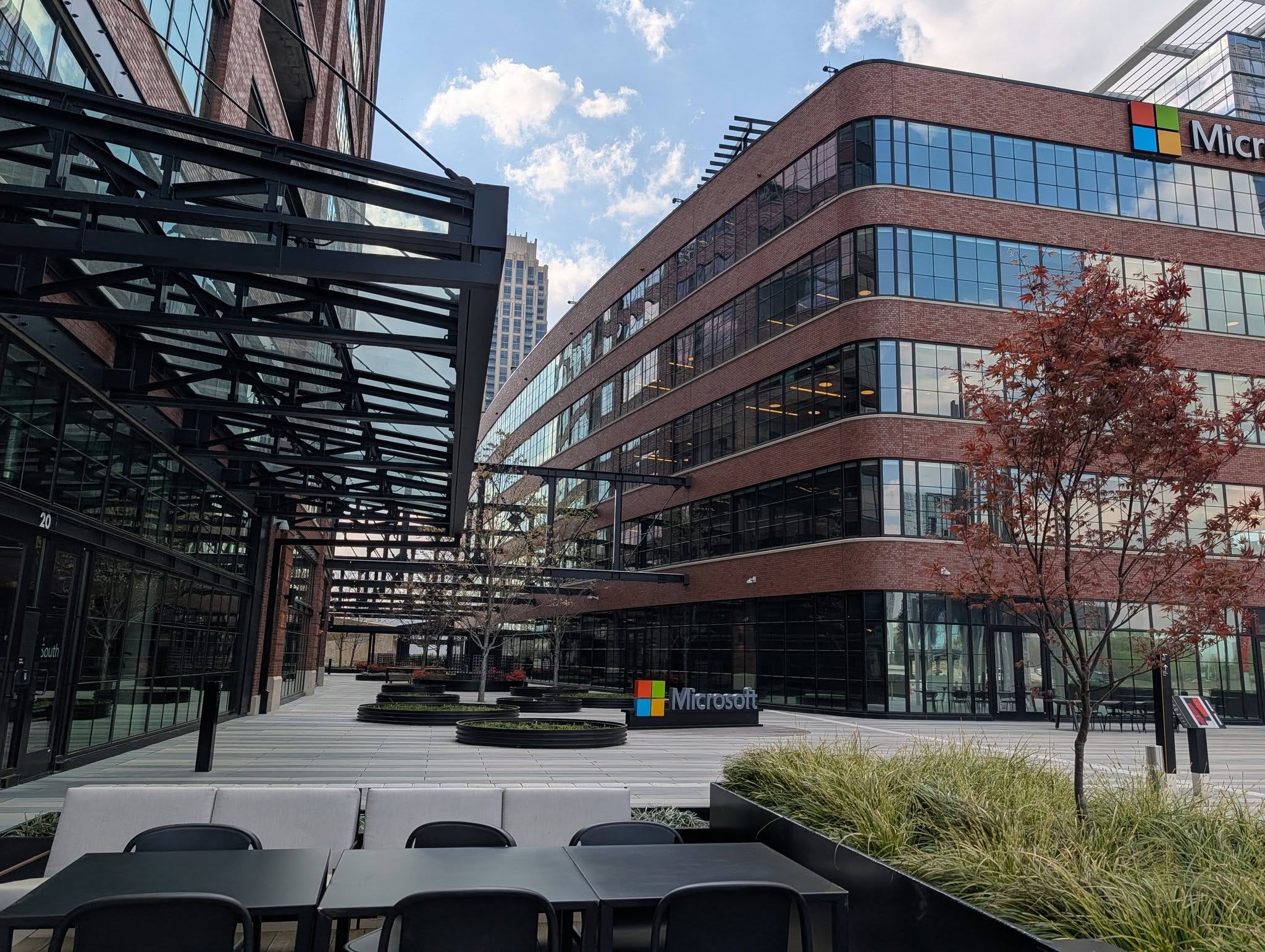
Work has already begun to move in this direction. The empty offices around us were evidence of that. People are no longer tied to a central location to do meaningful work. They are operating from home, from flexible environments, from places that allow them to integrate their lives in new ways. If AI is accelerating that shift in the workforce, it is reasonable to ask whether education will follow a similar path. And if it does, the implications are significant.
Public schools are built on the assumption that students come to them. Microschools and home-based learning environments invert that assumption. They bring learning closer to the student, closer to the family, and closer to daily life. In an AI era where powerful tools are increasingly accessible from anywhere, that proximity becomes more than a convenience—it becomes a strategic advantage. Learning can happen in context, in real time, and in ways that are deeply personalized.

At the same time, the funding conversation complicates this picture. Public schools, particularly in well-funded districts, have access to resources that microschools simply do not. They can invest in enterprise-level AI tools, secure infrastructure, and large-scale implementations that ensure equity across a broad population. But that advantage raises a difficult question: if public funds are being used to provide access to advanced AI tools, should all students in that community have access to those same capabilities, regardless of where they are educated? It is a question of fairness, but also of future readiness.
One of the most honest statements of the day came when a speaker admitted, “None of the answers have been fully met.” There was no attempt to present a polished solution or a definitive path forward. Instead, there was a shared recognition that we are in the middle of something still unfolding. The conversation repeatedly returned to culture, leadership, and strategy—not as buzzwords, but as necessary foundations for navigating uncertainty.
Another speaker emphasized this point by saying, “This is not about AI… it’s about culture,” and that idea reframed the entire discussion. Technology, no matter how powerful, is still just a tool. The outcomes it produces depend entirely on how it is used, who is using it, and the systems that support it. Public schools are working to build those systems thoughtfully and responsibly. Microschools are exploring what is possible when those systems are lighter, more flexible, and more responsive.
As the day came to a close, I found myself returning to the image of that empty Microsoft building. It wasn’t a failure. It was a signal. The world had changed faster than the infrastructure designed to support it. And education may be approaching a similar moment. Schools are not going away, just as offices are not going away, but the role they play and the way people interact with them is shifting.
If there is a “winner” in this AI era, it is not public schools or microschools alone. It is the systems that learn how to balance the strengths of both—those that can move quickly without sacrificing safety, and those that can provide access without stifling innovation. Speed matters. Funding matters. But neither is sufficient on its own.
The real question is whether we are willing to rethink where learning happens, who controls it, and how it adapts to a world that is no longer bound by physical spaces. Sitting in that beautiful, mostly empty building, that question did not feel theoretical. It felt immediate. And for the first time in a long time, it felt like the answer might not belong to a single system, but to a new way of thinking entirely.
If you’re a parent, educator, or founder thinking about what this shift means for your child or your school, I’d love to hear your perspective. Are we moving toward more centralized systems—or back toward the home?
Subscribe for more reflections from the front lines of AI and education, and share this with someone who’s asking the same question:
Where will learning live in the next 10 years?
-Jennifer from MARS
https://marsmicroschool.ai